
Weekly Roundup – Week of 10.31.2022
November 4, 2022
This week’s roundup covers relevant and insights-driven food and beverage-related news stories curated by our team of strategists and food enthusiasts:
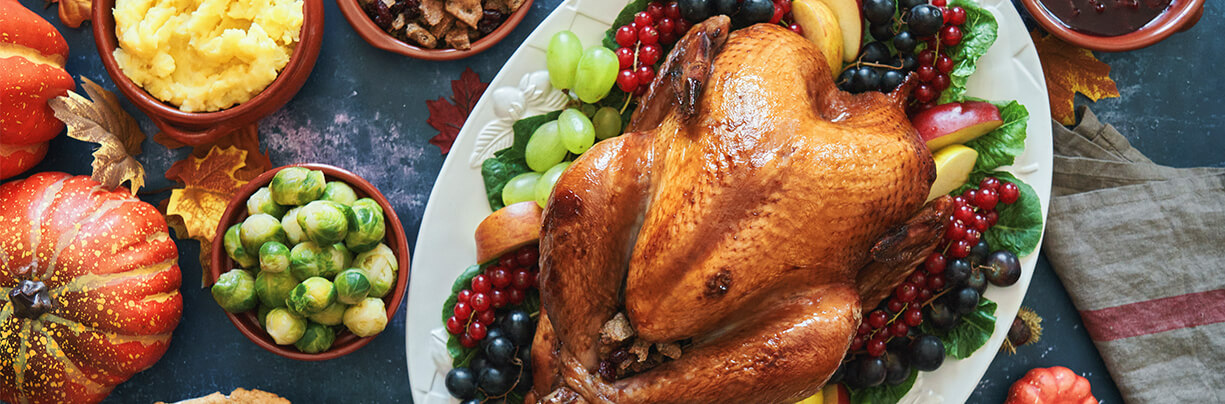
Thanksgiving Dinner Is Expected To Gobble Up Consumers’ Budgets
Losing more than 6 million turkeys this year, the avian flu has significantly hurt turkey farmers. And along with other supply chain issues, transportation costs, and mounting inflation, consumers are expected to be hit hard at the grocery store this Thanksgiving. A survey conducted by Personal Capital indicated that “one in five Americans doubted whether they would have enough money to cover the cost of Thanksgiving this year.” Currently, whole turkeys are up roughly $0.84/lb. according to the USDA and the prices of ingredients for beloved side dishes have risen upwards of 18% to 27% depending on the item. With this in mind, consumers are considering alternative solutions for Thanksgiving dinner. Limited-service restaurants, which have been slower to raise prices, are becoming an economical option for catered meals enjoyed at home. Consumers are also looking at inviting fewer people, reducing side dishes, and instilling a BYO alcoholic beverages policy to guests. “Gen Z, the demographic that feels the most financially constrained, is opting for meals of soup, salad, and pizza. They’re also more willing to ask friends to pay their share of the feast.” Read More. Subscription required after limited access is achieved.
Whole Foods Market’s Top 10 Food Trends for 2023
For the 8th consecutive year, Whole Foods Market’s Trends Council revealed its eighth annual top 10 food trends for 2023. “We’re thrilled to see things like baked goods with upcycled pulp from plant-based milks and ingredients like farmed kelp continue to gain popularity,” said Sonya Gafsi Oblisk, Chief Marketing Officer at Whole Foods Market, in the report. ‘Dates as sweeteners’ is one of the trends highlighted in the report. The sweetness of this dehydrated fruit is perfect for baking, making pasta, and sweetening condiments such as ketchup. Retro products like mac and cheese and pizza are being reinvented for the wellness-conscious consumer and fall under the ‘nutritional nostalgia’ trend. The report also indicated that ‘packaging’ enhancements that call out climate-friendly product attributes and sustainability efforts will gain ground in 2023. See the Full List and download the report.
Grocers Look To Vertical Storage Systems to Improve Efficiencies
With continued growth shown in grocery e-commerce over the past few years, technologies from other industries are being introduced to help boost fulfillment efficiency. Vertical storage systems have been used in industrial applications for years due to the stackable nature of the shelves and their 40 ft and above multistory towers. As noted in the Food Dive article, retailers are taking interest as these systems “allow workers to more efficiently store, retrieve, and assemble orders and can be less costly than other types of automated equipment.” Vertical storage also saves floor space and lets retailers hold products for store distribution and online fulfillment. Learn More.
Pink Is the “It” Color When It Comes To Food
According to Technomic’s What We Foresee for 2023 report for foodservice, pink foods are predicted to take over menus not only due to their brightly colored hues but because many include health-promoting antioxidants. Common foods such as pineapples, celery, and peas, for example, also come in pink varieties and chefs are using them as inspiration when crafting their own signature beverages and desserts. Schisandra berries, cara cara oranges, and hibiscus-steeped bissap are also predicted to show up in 2023. See More.
Fun Times with Functional Foods
It’s no secret that functional foods have experienced increased interest from food manufacturers and their consumers. And as consumers continue looking for ways to up their nutritional game, two companies have launched new products – with very different functional attributes – they hope will appeal to this growing population.
- Waterdrop, the creator of hydrating sugar-free cubes made with fruit and vitamins, has introduced another dissolvable cube, Microlytes. Containing five electrolytes and nine vitamins, Microlytes hydration recovery cubes satisfy consumers’ desire for nutritionally enhanced beverages without added sugar or caffeine. While the company claims, “consumers can reduce their carbon dioxide emissions and plastic use by 98% by switching to Waterdrop’s cubes and reusable bottles,” consumers can also expect to pay $14 for a 12-pack of cubes and $45 for its sports bottle.
- The five-year-old startup, Brightseed, has developed a dietary fiber made from hemp hulls that is designed to support gut health. The company uses an AI platform, Forager, to find molecules in plants that could have the biggest health and nutrition benefits in humans. Forager discovered the bioactive ingredient, Brightseed Bio 01, which could be used for cereals, granola, nutritional bars, and beverages. “Brightseed Bio 01 is the latest demonstration of how Forager A.I. is furthering our understanding of how bioactives found in nature are powerful catalysts to improve human health span,” said co-founder and COO, Sofia Elizondo.
Come back next week for more!