
Weekly Roundup – Week of 6.22.26
June 26, 2026
This week’s top foodservice stories cover new territory in every direction — from airports and TikTok to pizza robots and global trade — all curated by our team of strategists and food enthusiasts:
This Week’s Top Foodservice Story: Raising Cane’s Just Landed in an Airport — Its First, Ever
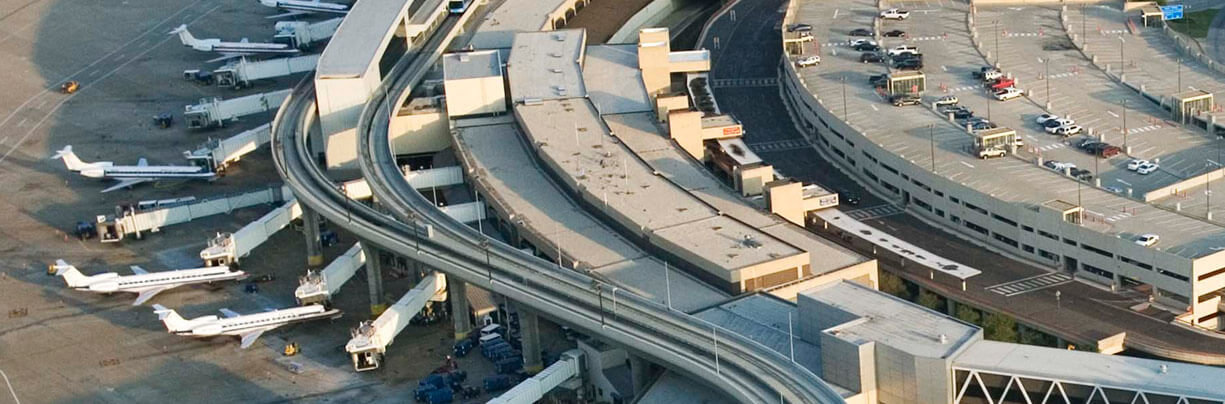
After building a cult following in strip malls and suburbs across America, Raising Cane’s opened its first-ever airport location on June 19 at Dallas Fort Worth International Airport, Terminal B, Gate B19. The new spot goes 24/7 starting July 3. DFW handles more than 75 million passengers a year, putting it among the highest-traffic retail environments in the country. For a brand famous for its singular focus — chicken fingers, crinkle-cut fries, coleslaw, Texas toast, and Cane’s sauce — airports are a natural next chapter: captive audiences, no outdoor seating, and premium real estate that rewards simplicity. Chains with streamlined operations and strong brand identity are increasingly competitive for gate-side expansion, and operators eyeing nontraditional venues should take note.
Starbucks Is Turning Its Baristas Into TikTok Creators
Starbucks announced at Cannes Lions this week that it will pilot the first brand-built Custom Creator Network inside TikTok’s new Content Suite — a program that lets select employees share content briefs, create videos, and take a cut of the resulting ad revenue. It builds on Starbucks’ Green Apron Creators initiative from 2025, which started with two full-time “global coffee creators” traveling to locations worldwide. The company says its employees post three times more than workers at similar-sized retailers, so the strategy isn’t about manufacturing authenticity; it’s about channeling what’s already happening. The program also marks a broader shift: brands that once punished employees for posting from work are now building monetized pipelines around that impulse. For operators and brands tracking where authentic, low-cost marketing is headed, this pilot is worth watching.
Founders Table Acquires Hopdoddy and Crosses 200 Fast Casual Units
Founders Table Restaurant Group — the PE-backed platform behind Chopt, Dos Toros, Protein Bar & Kitchen, and Field Trip — announced Wednesday it has acquired Hopdoddy Burger Bar, an Austin-based better-burger chain with 47 locations and $138 million in system sales. The deal, structured as a stock merger with no disclosed cash, brings the group’s portfolio past 200 units across 18 states and close to $500 million in systemwide revenue. Hopdoddy arrives with 12 consecutive periods of positive same-store sales growth, fueled by a focus on chef-driven ingredients, craft beverages, and made-to-order execution. CEO Jeff Chandler steps back to an advisory role; longtime VP of Operations Kenny Jett moves into the president seat. For fast casual brands in that $300–$800 million revenue tier with strong unit economics, Founders Table is clearly still shopping.
Miso Robotics Bought Zume’s Failed Pizza Tech — and 300 Patents Along With It
Miso Robotics, maker of Flippy the automated fry cook, has acquired the technology and intellectual property of Zume Pizza — the once-celebrated SoftBank-backed startup that raised $375 million, attempted to bake pizza in moving vans, and shut down in 2023. The deal gives Miso Zume’s pizza robotics hardware and software plus more than 300 patents covering food automation, robotic preparation, and packaging. CEO Rich Hull put the rationale plainly: the technology was always solid, but the market for food automation wasn’t there when Zume was running. It is now. Hull said Miso wants to expand from fry station automation into full pizza production — and is looking for restaurant brands willing to co-develop the next version. For operators considering long-term kitchen automation investments, the consolidation of IP in this space is accelerating fast.
With the July 1 USMCA Deadline a Week Out, Trump Says He’d Prefer Not to Renew
The United States-Mexico-Canada Agreement faces its mandated six-year review on July 1 — and as of this week, President Trump told reporters in Paris that he would “prefer not to have the deal.” Negotiations are continuing (a second round of Mexico-US bilateral talks wrapped June 16–17; a third round is set for July 20 in Mexico City), but a clean 16-year extension before the deadline now looks unlikely. If no extension is reached, the USMCA enters a cycle of annual renegotiations that could run through 2036, generating sustained uncertainty across every sector that depends on North American supply chains. For restaurants, the stakes are direct: Mexico and Canada supply the industry’s top imported proteins, produce, and dairy. The National Restaurant Association has made USMCA renewal a top 2026 federal priority. Operators sourcing across the border should plan for continued unpredictability through the summer.
Find more of this week’s top foodservice stories every Friday on the Omnivore blog.


