

Blogs Are As Important As Ever
April 19, 2022
Is your company looking to generate more leads, increase ROI efforts, drive additional website traffic, and improve its credibility? If so, adding a blog to your website can help your company achieve all of this and more. Blogs serve as a valuable resource to educate existing customers and targeted prospects about your brands, products, and services along with business beliefs and company culture. They provide a valuable way to position your company as thought leaders in its respective industry with little upfront investment.
Whether you are a DTC or B2B company, content is key, and leveraging long-form blog content can give your business a competitive edge and help garner higher search engine results pages (SERPs), thus driving more qualified traffic to your site. Here are some important considerations to note before getting started or if you are looking to generate more traffic to your existing blog:
Relatable & Relevant
People conduct at least a dozen searches a day and regularly share articles with friends and colleagues. Seventy percent of consumers would rather learn about a business from a blog than from an advertisement. Crafting relevant content that is relatable and valuable to your prospective targets enhances the chance that not only the content will be shared, but that the person viewing the content engages further with your company. We’ll dig into lead generation shortly.
A content strategy is crucial to your marketing strategy and serves as a foundational guardrail for your company’s external presence. Blogging – while often overlooked – can be an important part of your overall content strategy. Being mindful of the topics you select and when you schedule to share can make all the difference in connecting with the right customers. Over 68% of consumers say that a blog adds credibility to a website and Optinmonster cites, “businesses that blog experience twice as much traffic as businesses who don’t.” As your customers are actively searching for information, building a robust library of authentic and evergreen content that’s interesting to your audience, and posting it consistently, helps drive organic, repeat traffic to your blog and website.
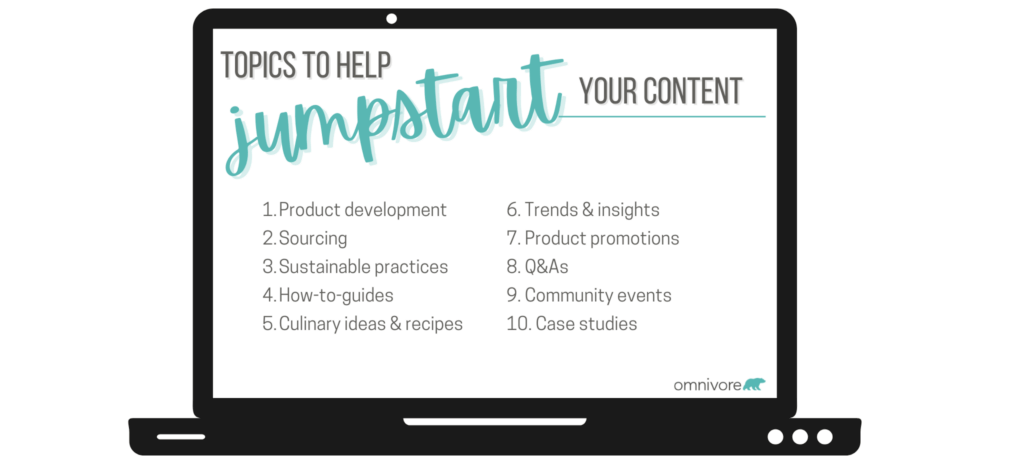
Here are some thought starters as you brainstorm content ideas:
Blogging also proves a low investment opportunity. Using your company’s own subject matter experts for crafting content enhances credibility at little to no additional costs. Plus, one blog post could be dispersed across multiple channels, extending reach from one single piece of content. Sharing and linking to blog content from your social channels can increase both blog awareness and the number of subscribers. LinkedIn indicates that blogging is the top content marketing tactic. And concurrently, 67% of B2B marketers and 56% of B2C marketers use blogs on their social media, according to Optinmonster. Within your content strategy, make sure to coordinate your social posts with your scheduled blog content to help boost engagement and web traffic.
This graphic illustrates how content can be disseminated throughout multiple channels:
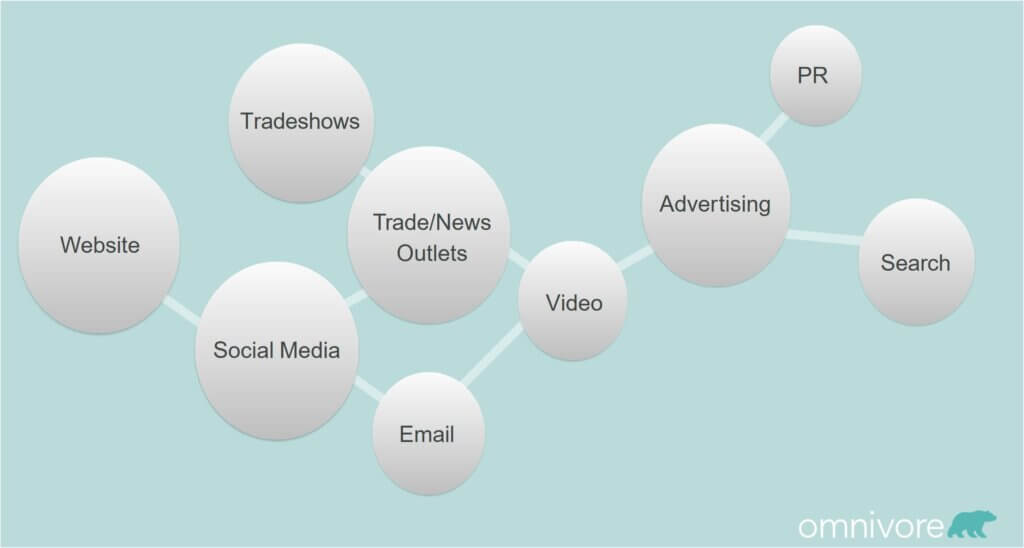
One piece of content can take on many different formats in many different places. Being mindful of when and where you’re distributing pieces of content reinforces the need for brand consistency and guardrails.
Lead Generation & Nurturing
As marketers, one common question our team at Omnivore receives is “how do we get more qualified leads and how do we maintain those leads?” While there is no one simple answer as individual business strategies and objectives need to be factored in, blogging has been shown to be a successful lead generation tool. In fact, strategicabm.com indicates that “81% of businesses report that their blog is important or critical in generating leads”, and Optinmonster also discovered that “57% of marketers say they’ve gained customers specifically through blogging.” Knowing your target customer and developing rich, meaningful content that delivers against what they are actively seeking can garner more suitable leads and encourage relationship building.
Once you have interested prospects, you must continue to maintain an arsenal of worthwhile content and support to keep your leads engaged as they journey down the path to purchase. Tailoring content that is specific to each lead adds value and shows you understand their needs and aspirations. Customization is key and the more customized approach you take can bring greater ROI and customer retention down the road.
Best Practices
Now that we have learned about how to generate qualified leads by sharing robust blog content that’s relevant to our audience, let’s investigate why format and frequency matter.
Your subject matter expert has written an insightful piece of content. How can you increase views of that content? By incorporating visuals, infographics, audio, and video components along with text, you can help heighten views incrementally. In fact, sources show that articles with images get 94% more views as opposed to those with no visuals, and 43% of consumers increasingly want video content from marketers. For example, try including product images, recipe reels, or manufacturing processes and how-to videos within your blogs to help educate your customers with fresh content they will want to return for and entice them to share with others.
Successful blogs typically contain over 1,500 words and Curata adds that long-form posts generate nine times more leads than short-form blog posts. According to HubSpot, B2C companies that blogged 11+ times per month got over four times as many leads as those that blog only 4-5 times per month. Increasing the overall word count and frequency of blog posts could result in better customer engagement and higher lead generation.
To learn more about how to build an effective content strategy and implement a lead-generating blog platform, connect with us today.