
Weekly Roundup – Week of 11.10.25
November 14, 2025
Technology meets food innovation in this week’s roundup – curated by our team of strategists and food enthusiasts:
Driving Thru A Faster Lane
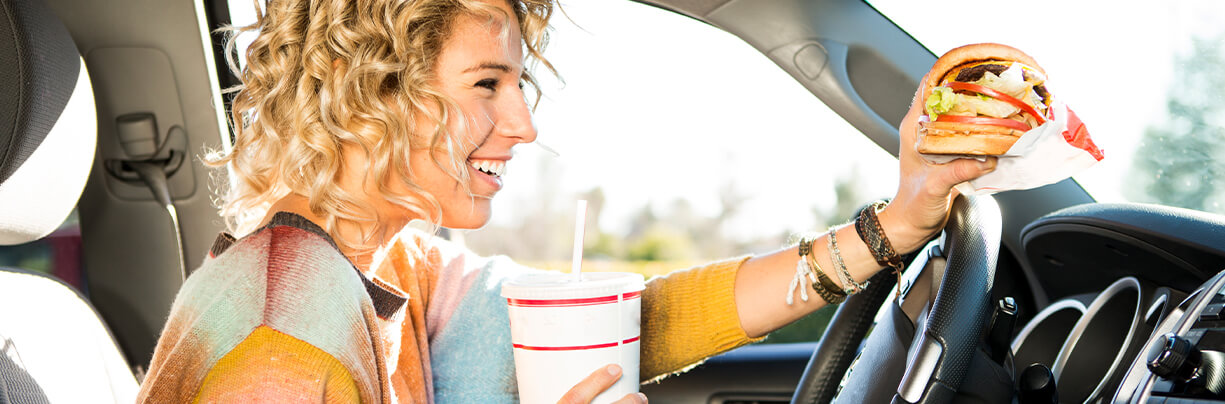
In today’s high-velocity foodservice environment, the drive-thru isn’t just a convenience lane—it’s a strategic front line. According to QSR Magazine, restaurants are rethinking their staffing models at the drive-thru to strike a vital balance between speed and hospitality. For operators, this evolution matters far beyond curbside service. It forecasts a change in how the entire restaurant industry approaches efficiency, guest experience, and labor management. Optimized staffing means faster throughput, elevated customer connection, and more sustainable operating models in a labor-tight world. Learn More
Next Level AI-Powered Cooking Technology
Strategy and precision go hand in hand behind Gambit Robotics, a startup redefining what’s possible in the smart kitchen space. Gambit is introducing an AI-powered cooking assistant that turns everyday home cooks into confident chefs. For the commercial food industry, this innovation means AI and robotics are no longer just back-of-house efficiency tools—they’re becoming personal, interactive partners in the cooking process. Operators and manufacturers alike will need to rethink how automation, precision, and personalization can work together to elevate both the home and professional kitchen experience. Read More
Commercial Restaurants React To Elevated Consumer Pressures
Featured in the latest Nation’s Restaurant News article, chains are navigating a tightening consumer environment marked by budget stress and changing habits—forcing quick-service, fast-casual and casual dining brands alike to revise value, marketing and operational strategies.
- Pizza segment: Falling same-store sales (e.g., a 6% drop at Pizza Hut), signals weakening among cost-sensitive consumers; competitors like Domino’s Pizza are leaning more heavily into promotions and value deals to counter this.
- Quick-service: The low-income consumer base is pulling back sharply (double-digit declines in some chains), prompting heavy focus on value meals and driving offers like extra value menus at McDonald’s.
- Casual dining: Chains like Chili’s are outperforming by attracting value-seeking consumers via promotions and value messaging, while others see check management from guests trading down.
- Fast casual: Brands skewing younger (e.g., Chipotle Mexican Grill, Sweetgreen) are experiencing broad-based pullback in frequency among younger and mid-income consumers facing student-loan debt, slower wage growth, and economic uncertainty.
Is SMS Ordering Sustainable?
Kea AI has launched Text AI, a conversational text-messaging ordering system that enables guests to place orders, ask menu questions, and pay—all via SMS using the same phone number as the voice channel. Could this move mark a key progression in how restaurants will capture off-voice orders and enable operators to meet guests where they are texting and integrate messaging, voice, and POS systems into a seamless omnichannel UX? Read On
Top Global Consumer Trends for 2026
As global uncertainty persists, consumers in 2026 are gravitating toward products and experiences that simplify life, provide emotional reassurance, and support well-being. At the same time, bold self-expression is on the rise, with shoppers seeking offerings that reflect their unique identities, making hyper-targeted, personalized strategies more important than ever. Demand for scientifically validated, high-tech wellness solutions continues to grow, with consumers willing to pay a premium for products that deliver proven benefits. Find all trends, here
Visit our blog every Friday for Friday insights and the latest food and beverage news!