

Standing Out In A Crowded Digital Space
June 19, 2025
SEO for Food and Beverage Brands: A Recipe for Higher Rankings
From legacy brands to savvy startups, food and beverage companies are in a race to be found—online. Whether you’re promoting a new product line for non-commercial foodservice, trying to get discovered by restaurant buyers, or launching an e-commerce section on your site, your digital presence matters. At the core of that visibility is Search Engine Optimization (SEO)—and presently, the rise of AI-driven search experiences is adding a new layer of opportunity through what’s being called Answer Engine Optimization (AEO).
In this blog, you’ll learn how smart SEO tactics like keyword research, recipe and product application content, and ongoing optimization can help your food brand(s) increase rankings, along with how AI-driven search evolution is part of what’s shaping SEO today. We’ll explore why both are worth a second look if growth is a key piece of your business blueprint.
Why SEO Matters For Food and Beverage Brands
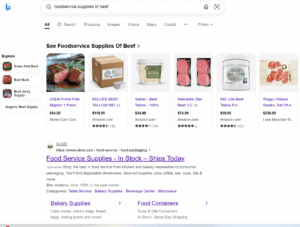
Bing SERP: Foodservice Beef Suppliers
SEO is the practice of improving a website’s content, structure, and discoverability so your site ranks higher in search engine results. The connection between search and discovery is especially strong in the food space with SEO being a key driver of organic traffic, brand awareness, and long-term growth. For B2B food brands, SEO supports a longer, more complex buying journey—where decision-makers like chefs, procurement teams, and foodservice directors are researching solutions, product specs, and reliable partners.
68% of all online experiences start with a search engine1 and operators and distributors are searching for short- and long-keyword terms such as “best bulk condiment dispensers for QSR,” “sustainable packaging for grab-and-go meals,” and “foodservice sauces from Midwest distributor.” These are highly specific, high-intent keywords, and ranking for them means you’re showing up at a key moment in the buyer journey.
Increasingly, some of those searches are being answered not just by traditional SEO keywords and links, but by AI-generated summaries, like ChatGPT or Google’s Gemini-powered overviews. That’s where AEO comes into play. AEO favors clear, conversational answers with sources—ideal for B2B brands looking to get cited in AI summaries.
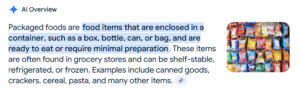
Google AI Overview Page
Appearing on higher search engine results page (SERP) positions and AI-powered summaries increase visibility and translate directly to more traffic to your website. However, ranking higher may get you in the digital door, but content is what keeps your buyers there. When your content delivers real value, it builds credibility, keeps visitors interested, and guides them toward conversion.
Key Takeaway: If your brand isn’t showing up on the first page, you’re likely invisible to a large portion of your target audience. And, if the content within your site doesn’t provide the information potential customers searched for, meaning the page they land on isn’t useful, clear, or relevant to their needs, they’ll bounce—and possibly turn to a competitor.
How Recipe & Product Application Content Is An SEO Goldmine
While consumer-facing recipe content may not be the priority for B2B brands, application-based content remains a powerful tool—especially when tailored to the operational needs of foodservice segments.
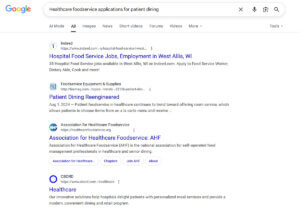
Google: Healthcare Dining Applications
Instead of lifestyle-driven content, think in terms of efficiency, consistency, and ease of execution at scale. Here are some examples across different buyer audiences:
1. Healthcare Foodservice:
Healthcare kitchens must balance nutrition standards, dietary restrictions, and high-volume service. They also care deeply about waste reduction, ease of compliance, and patient satisfaction.
Examples:
- Low-Sodium, High-Flavor Meals Using Our Ready-to-Serve Meal Kits
- Build a 4-Week Heart-Healthy Cycle Menu with Our Pre-Portioned Side Dishes
- Our Textured Proteins Make It Easier to Meet USDA Dietary Guidelines
2. Restaurants (QSR & Fast Casual):
Restaurant operators are always looking for ways to streamline prep, maintain consistency, and cut labor costs. Content that shows your product in use within real kitchen workflows can help build both interest and trust.
Examples:
- 3 Limited-Time Menu Ideas Using Our Flame-Roasted Veggie Blends
- How to Build a Consistent Sandwich Topping Station with Our Portion-Controlled Condiments
- 1 Ingredient = 5 Signature Sauces with Ease
3. Colleges & University Dining:
Campus dining programs juggle diverse dietary needs, high volume, and Gen Z expectations for variety and sustainability. Content that shows menu innovation and labor efficiency can resonate strongly.
Examples:
- Plant-Based, Global-Inspired Bowl Recipes
- Create Vegan Grab-and-Go Options With Our High-Protein Wraps and Heat-and-Serve Fillings
- Prep for Peak Hours: Speed Scratch Recipes That Help Your Team Serve More Students Faster
Key Takeaway: It’s not just about visibility—it’s about proving your product belongs in their kitchens and offers immediate value to foodservice operators trying to solve real-world challenges.
SEO Isn’t a One-Time Task—It’s Ongoing
Search engine algorithms evolve and so do user habits and competitors’ strategies. That’s why brands who treat SEO as a one-and-done project often fall behind. If your site hasn’t been touched since your last product launch, it’s probably not working as hard as it could be.
And now, search behavior is evolving, too. A recent study found that 27% of Americans are turning to AI tools like Microsoft Copilot and Perplexity instead of traditional search engines.2 As indicated, these tools generate instant answers rather than displaying a list of links, and optimizing for this shift through AEO increases your chances of being pulled into AI-generated summaries.
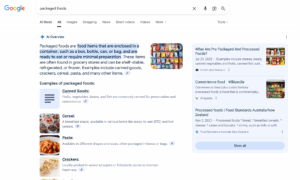
Google AI-Powered Search: Packaged Foods
AEO and SEO optimization is crucial for foodservice B2B environments:
- Buyer Needs Evolve—And So Do Their Searches: Operators’ challenges shift with the seasons, trends, and regulations. One quarter, they’re searching for labor-saving equipment. The next, they need solutions for cold menu items during summer service. Ongoing SEO ensures you’re aligning with those evolving needs in real-time.
- Content Performance Needs Continuous Improvement: Just because a blog or product page ranked well last year doesn’t mean it’s still performing. Reviewing analytics tools like Google Search Console or GA4 can help identify pages with declining traffic or high bounce rates.
- Competitors Are Optimizing, Too: If your competitors are consistently creating fresh, keyword-optimized content such as blogs, applications pages, spec sheets, or industry guides, they’re slowly pulling ahead in search visibility. Ongoing SEO helps you defend your rankings and uncover new opportunities before they do.
Key Takeaway: If you’re not optimizing content, you’re not maximizing search discoverability. Refining content, adding new pages and solutions to your site, and staying informed on what you’re competitors are creating will help your food brand maintain and boost your SERPs.
Summary
For B2B food brands, SEO is less about volume and more about visibility in niche, high-value searches. Done right, it can shorten sales cycles, generate leads, and position your brand as the go-to solution for foodservice operators from restaurants and college and university dining to healthcare and beyond.
SEO-optimized pages with clear product benefits, usage cases, or menu applications help build trust and answer questions early—before sales outreach even begins. SEO is not a one-and-done tactic to check off a list, it requires ongoing attention to ensure your results rank high and your site pages drive traffic to valuable leads. As AI-powered search experiences continue to grow, integrating AEO strategies into your SEO approach can help ensure your content gets discovered—whether it’s by a person scrolling search results or AI generating instant answers.
Want to see what’s possible for your brand? Let’s connect on how we can tailor an SEO strategy with AEO integration that increases rankings and meets your business and brand goals.
Sources:
1 BrightEdge
Google Food Trends Report
2 Is AI-focused AEO the new SEO?, The Hustle, May 13, 2025