

B2B to B2Human: The Ultimate Guide to Marketing to the Modern Chef
February 26, 2026
In the traditional foodservice supply chain, the focus has been on perfecting the “B2B” approach, driving case volume, sharpening price-per-ounce advantages, and winning against competitive line items on a distributor sheet. The strategy concentrated solely on procurement teams, contracts, and margins.
But the industry has changed — and so must B2B strategy.
Today’s marketing plans too often stop at the buyer, overlooking or not inspiring the true end user: the chef and culinary decision-makers. Their daily reality is defined by speed, labor constraints, menu differentiation, and guest expectations. As a foodservice supplier, you’re not just selling a case. You’re selling ease of execution, plate appeal, back-of-house efficiency, and creative possibility.
Winning means recognizing that every B2B transaction is ultimately validated or vetoed by a chef partner. It’s time to move from B2B to B2Human. Here are reasons to shift your marketing strategy:
1. The Psychology of the Modern Chef: Why “Corporate” is Losing

Source: Getty Images
Today’s Executive Chefs and F&B Directors are increasingly Millennial and Gen Z “digital natives.” They value authenticity and efficiency over polished corporate literature. They don’t want to be “sold” to, they want to be “supported.”
When a chef validates a new supplier, they are asking themselves three questions:
- Does this solve a labor problem? Chefs are looking for products or equipment that streamline repeatable tasks, reduce back-of-house strain, and save valuable prep time.
- Does this improve my margin? Chefs need solutions that control inventory, reduce waste, and deliver consistent cost-per-plate performance to protect profitability.
- Does this make my final dish more “Instagrammable” or unique? Chefs gravitate toward offerings that elevate presentation, spark creativity, and help their menu stand out both on the table and on social feeds.
If your marketing content doesn’t answer these questions, it’s just noise. Humanizing your brand means acknowledging the chaos of the kitchen and positioning your product as the solution within the storm.
2. Benchmarking Success: The “Engagement Rate” Reality Check

Source: Getty Images
How do you measure “human” connection? You need to look beyond the surface. In standard B2B industries like SaaS or manufacturing, a “good” engagement rate often hovers around 1–2%. However, in the food and beverage world, content is inherently visual, and that sets the bar significantly higher.
The most successful foodservice brands are benchmarking against these three high-intent signals:
- “Save” is the New “Lead”: For a chef, a “Save” on social media is a high-intent signal. It means your product or recipe application has been filed away for the next seasonal menu change. In B2Human marketing, 50 saves are more valuable than 5,000 likes.
- The Peer-to-Peer Share: Kitchens are tight-knit communities. When one chef sends your video to their sous-chef or a colleague at another restaurant, your brand has achieved “earned trust.” This peer-to-peer validation is the ultimate benchmark of B2Human engagement.
- The Feedback Loop: Are they commenting with questions about yield, prep time, or smoke points? These responses show that they aren’t just looking at a pretty picture. They are mentally placing your product on their line.
Focusing KPIs simply on clicks and open rates is not enough of a story. Digging deeper into human engagement will guide long-term content development and drive stronger performance for more impactful analytics.
3. SEO Strategy: Solving the “Labor-Saving” Pain Point
Source: Getty Images
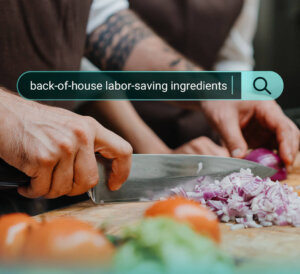
To rank for the terms modern chefs are searching for, your content must address operational pain points. Keywords like “labor-saving ingredients,” “cross-utilization,” and “speed-scratch solutions” are the bridge between your product and their kitchen.
- The “Hero” Ingredient: Don’t just market a sauce – market a “3-way flavor base.” Show how a single product can be used for a coating, a sandwich spread, and a salad dressing.
- Menu Engineering for Margins: Help your restaurant partners build profitable menus without increasing their SKU count. Manage inventory by demonstrating how one ingredient can be used across multiple dining occasions and dayparts.
Exploring how chefs and culinary teams are searching for inspiration and new recipes, and in turn, being able to solve for these searched terms can set you apart from a competitive supplier offering the same types of products. The goal is to earn high rankings on SERP pages with content that’s relevant to the challenges today’s chefs are facing every day.
4. Content Tactics: How to Humanize Your Brand Today

Source: Getty Images
If you want to move the needle on your engagement rate, implement these three tactical shifts:
- Scrap the “Studio” Look: Authenticity beats high production value every time. Use “behind-the-scenes” footage. Show the stainless steel, the high-BTU burners, and the real textures of the food.
- Video Over Text: Show the product in a real, high-volume environment. A 30-second reel showing a “labor-saving” prep technique is worth more than a 10-page white paper.
- Speak the Language: Replace corporate jargon with kitchen vernacular. Talk about “plate coverage,” “holding time in a window,” and “flash-point stability.” When you speak their language, you prove you’ve been in the weeds with them.
Using specific “chef language” within your social posts and digital content connects you to culinary partners and demonstrates that you understand and relate to their unique needs.
5. The Long-Term Play: Building Lifetime Value (LTV)
The ultimate goal of B2Human marketing isn’t just getting that first order. It’s earning a long-term value and partnership. In foodservice especially, loyalty is built over time through consistency, credibility, and real operational impact. Insights that help chefs run tighter kitchens, improve execution, or drive profitability are examples of value-first content.
By providing value-first content, you lower your Customer Acquisition Cost (CAC) over time because you become a trusted resource rather than just another vendor. Brands that invest in educational content, operator guides, culinary inspiration, and problem-solving insights often see a gradual reduction in CAC.
Trust compounds. Prospects enter the sales conversation already informed, and existing accounts expand more readily. And because of these, sales cycles shorten and retention improves. Instead of repeatedly paying to reintroduce yourself to the market, your reputation begins working on your behalf.
Win the Kitchen, Win the Business
The line between B2B and B2C has blurred. The “Omnichannel Eater” is the same person as the “Omnichannel Chef.” They want transparency, they want efficiency, and they want to feel understood. Understanding chefs’ pain points and the content that matters most to them builds trust and connectivity.
By focusing on B2Human, thoughtful content can turn your brand from simply being a supplier to being a true partner. From startups to legacy, regional to global, we’ve helped foodservice brands shift marketing plans, tactics, and content from purely B2B to B2Human.
If you’re ready to connect deeper with your chef audience, we’re ready to help. Schedule time with a brand strategist today.
Looking for related content, read these blogs:
Standing Out In A Crowded Digital Space and How Chefs Are Turning Viral Food Trends Into Menu Staples